Adult children can’t stop a parent from answering the phone, but they can cut how many scam calls get through and change what happens when one does. The article explains why the “just don’t answer” rule fails: a ringing phone has always meant someone who matters, and the rule can sound like distrust.

Why "just don't pick up" never works, and the changes to the phone and the habit that do.
You probably can't get your parent to stop answering the phone. What you can do is cut the number of scam calls that reach them and change what happens when one does. Both are things you can set up this weekend.
If your parent keeps answering spam calls after you've asked them to stop, the problem usually isn't stubbornness or poor judgment. A ringing phone is a habit built over decades, and another conversation won't undo it. Settings, a few saved contacts, and one short rule will do more.
Here is the plan, in order:
Block calls at the carrier and on the phone, so fewer ring at all.
Save the real callers (family, doctor, pharmacy) so a name appears on the screen.
Give your parent one rule for unknown callers: if it's real, they'll leave a message.
Know what to do, calmly, if they've already talked to a scammer.
Give them someone to call when a call feels off, like Arthur, an AI companion they can reach with a regular phone call.
None of this is foolproof. Scammers change numbers constantly, and no filter catches everything. The goal is fewer calls, clearer signals, and a parent who has a script for the ones that get through.
Why does my parent keep answering spam calls?
Because to them, a ringing phone has always meant someone who matters. Your parent grew up when a call was rare and ignoring one felt rude or even reckless. That reflex runs deeper than any warning you can give.
Three things sit underneath it:
A ringing phone means someone needs them. For decades, an unanswered call could mean a missed emergency or a missed relative. Letting it ring feels like breaking a rule.
Missing a real call feels riskier than talking to a stranger. The doctor's office, the pharmacy, a home health aide, and the bank all call from numbers your parent may not recognize. Answering feels like the responsible choice.
For some, it's the only conversation that day. If your parent lives alone, a friendly voice on the line can be the best part of the afternoon, even when they suspect it's a sales call. Scammers know this, and they are good at sounding friendly. Part of the fix is giving the phone a better reason to ring. More on that below.
That's why a parent can understand scams, nod along when you explain them, and still end up chatting with one. Awareness and habit are different things, and in the moment the habit wins. If you're thinking "my mom keeps falling for phone scams," start here: it's usually habit, politeness, and loneliness at work, not a lack of intelligence.
Why doesn't "just don't answer" work?
It asks your parent to break a lifelong habit and gives them nothing to do instead. The rule fails the first time the screen shows a local number or a name that might be the pharmacy.
It can also land badly. When you say "never answer unknown numbers," your parent may hear "I don't trust your judgment." Many older adults have run their own households and finances for decades, and being told how to handle a phone can feel like a loss of independence. The usual result is a quiet standoff: you repeat the rule, they agree, the phone rings, they answer.
Two more problems make the rule fragile:
It depends on self-control in the moment. Scammers build urgency, authority, and warmth specifically to get people past their own good intentions.
It puts the whole burden on your parent. Every call becomes a test they can fail.
A better approach moves the work off your parent's shoulders. Fewer calls get through, real callers are easy to recognize, and one simple rule covers the rest.

How do I block spam calls for an elderly parent?
Stack three layers: the carrier, the phone itself, and (for a landline) a call blocker. Each one catches calls the others miss. Do the carrier first, because it works before the call reaches the phone.
Turn on carrier spam blocking
The three big U.S. carriers each have a free tool. Install it on your parent's phone and switch the blocking on:
AT&T: ActiveArmor, which blocks calls flagged as fraud risks.
Verizon: Call Filter. The basic version is free; Call Filter Plus adds paid features.
T-Mobile: Scam Shield. The base service is free, with a paid Premium tier (about $4 a month per line; check current pricing).
One catch: automatic blocking occasionally catches a call someone wanted. Check the app's call log with your parent now and then.
Silence unknown callers on the smartphone
iPhone: go to Settings > Phone > Silence Unknown Callers. Calls from numbers that aren't in contacts, recent calls, or Siri Suggestions go straight to voicemail and the phone doesn't ring.
Android: in the Phone app's settings, turn on spam filtering ("Filter spam calls" in Phone by Google). On Pixel phones, Call Screen can answer unknown callers for your parent and show a transcript.
The tradeoff is real. Silencing unknown callers also silences a doctor's office that isn't saved, which is why the next section matters.
Add a call blocker for a landline
The carrier and phone settings don't touch a landline. A call blocker for seniors on a landline is a small device that sits between the phone and the wall jack, or a cordless phone with blocking built in. Most work one of two ways: they block known spam numbers, or they ring only for numbers on an approved list. The approved-list style is stronger but needs someone to keep the list current. If the home phone runs over the internet (VoIP), ask the provider what blocking it offers; the FTC points to the FCC's call-blocking resources for landline and VoIP options.
Know what the Do Not Call Registry does and doesn't stop
Register your parent's number at donotcall.gov or by calling 1-888-382-1222 from that phone. It's free and it never expires. But the FTC is clear that the Registry stops sales calls from real companies that follow the law, and that it doesn't block calls. Scammers ignore it. Sign up anyway, because it clears out legitimate telemarketers, which makes the remaining unknown calls more suspicious.
How do I make real callers easy to spot?
Save every number your parent should answer as a named contact, so a real call looks different from a stranger's. This is what makes "silence unknown callers" safe: the people and places that matter ring through, and everything else goes to voicemail.
Set it up in one sitting, with your parent's phone in hand:
Save family numbers (mobile, home, work) under the names your parent uses, such as "Dana (daughter)."
Save doctors, specialists, the dentist, and the pharmacy. Pull the numbers from appointment cards and pill bottles.
Save the pharmacy's automated refill line if it calls from a different number. Ask the pharmacist which numbers it uses.
Save close friends, neighbors, and anyone from church or a regular group.
Save the bank's number from the back of the debit card, labeled "Bank (number on my card)." It's the number to call back, not the one a caller gives.
Mark the family and doctor contacts as favorites so they're one tap away.
Add photos to the family contacts if the phone supports it.
Print a large-type card with family, doctor, and pharmacy numbers and tape it by the phone.
Test it: call from another phone and confirm the name appears.
One caution: caller ID can be faked, which the FTC calls spoofing. A saved name on the screen is a good sign, not proof, so the rule in the next section still applies.
What one rule should I give my parent?
Give them this: if it's real, they'll leave a message. It replaces "don't answer" with a reason your parent can agree with. The doctor's office, the pharmacy, and the bank will leave a voicemail your parent can listen to and return on their own terms. Someone who needs an answer right now, on the phone, is the warning sign.
And if a message sounds urgent and they’re not sure it’s real, they can call Arthur and talk it through before calling anyone back.
The rule works because it gives your parent permission. Letting a call go to voicemail stops feeling like ignoring someone and starts feeling like screening, which is what the rule is for.
For the calls they do answer, add a simple hang-up line they can say without thinking:
"I don't handle that over the phone. I'll call you back at the number I have on file."
Then they hang up. They don't need to explain, argue, or be polite for another minute. Practice it once together so the words are ready when they're needed, and put it on the card by the phone.
A few reminders that fit on the same card:
Hang up on a recorded message. Don't press a button to be taken off a list or to reach a person, because the FTC warns it can lead to more calls.
Call back only on a number they already have, such as the one on a card or statement.
No real agency or company demands payment by gift card, wire transfer, or cash reload card.
Hanging up on a caller is never rude.
Not sure about a call? Call Arthur before calling anyone back.
What if my parent already talked to a scammer?
Start with calm, and find out what actually happened before you decide how worried to be. Many people hide a scam call because they're embarrassed, so how you respond decides whether you hear about the next one. Something like "Thanks for telling me. Let's sort it out together" works better than any warning.
Some parents find it easier to say “I think I just got scammed” to a neutral voice first. If your parent uses Arthur, it can be that low-pressure first call, a place to talk through what happened and work out what to do next.
Then work through what changed hands:
Money was sent. Call the bank or card issuer right away and ask what can be stopped or reversed. For gift cards, call the card company. For a wire, call the wire service. Speed matters most here.
A card, bank, or Social Security number was shared. Tell the bank, watch the accounts closely, and consider placing a fraud alert or credit freeze with the credit bureaus. Freezes are free.
The caller got remote access to a computer. Disconnect the device from the internet, then change passwords from a different device. Have someone you trust check the machine.
Nothing was shared. Save the number if it's useful, block it, and move on.
Then report it. If money or information was lost, file at ReportFraud.ftc.gov. If not, the FTC's streamlined form at donotcall.gov takes a minute. Two free helplines can walk you through next steps: the AARP Fraud Watch Network Helpline at 877-908-3360 (open to anyone), and the Department of Justice's National Elder Fraud Hotline at 833-372-8311 (for adults 60 and older).
If your elderly parent keeps talking to scammers even after all of this, especially a caller who has built a relationship over weeks, that is a different situation. Ask the bank about account alerts or a trusted-contact setup, mention it to their doctor if you've noticed changes in memory or judgment, and call Adult Protective Services if money keeps leaving.
Where can a parent get a second opinion on a call that felt off?
The best second opinion is one your parent can reach in the moment, without an app, a password, or waiting for you to pick up. Most parents won't text a family member "is this a scam?" at 2 p.m. because they don't want to bother anyone. A number they already trust removes that barrier.
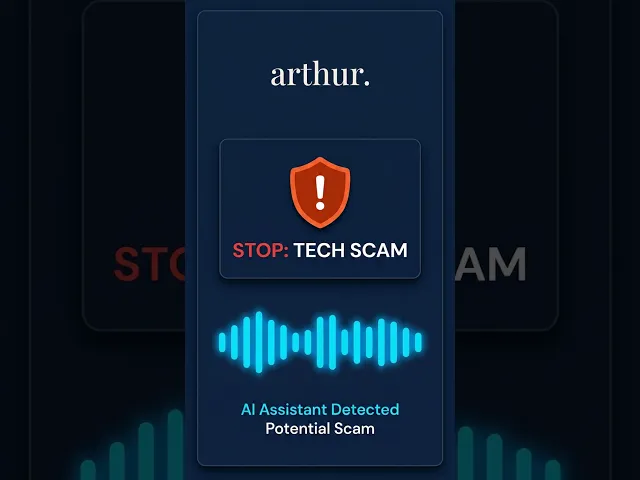
That's where Arthur fits. Arthur is an AI companion that works over a regular phone call, so there's nothing to download and no new device to learn. If a call felt strange, your parent can call Arthur, describe what was said, and talk it through.
Arthur also addresses the other half of the problem: the parent who answers because they want to talk. Arthur calls to check in and holds a real conversation, in an unhurried voice. For someone whose phone rings with scammers because it rarely rings with anyone else, that gives the phone a trustworthy caller.
It isn't a replacement for you, and no single tool catches everything. Think of it as one more layer alongside the blocking and contacts above. Arthur is currently in beta.
Here’s a quick look at how Arthur can help seniors spot scams.
Learn more about how Arthur works on the AskArthur YouTube Channel.
The short version
You can't make your parent stop answering, but you can make answering matter less. Block calls at the carrier and on the phone, add a call blocker if there's a landline, save the numbers that matter, and give them one rule: if it's real, they'll leave a message. Add a hang-up line for the calls that get through, and a calm plan for the day one works. And give them a number to call, like Arthur, when something feels off.
The goal isn't a parent who never makes a mistake. It's a parent who gets fewer calls, recognizes the real ones, and tells you when something felt off.
Want a second opinion your parent can reach with a regular phone call? Sign up for the Arthur beta and be among the first families to try it.